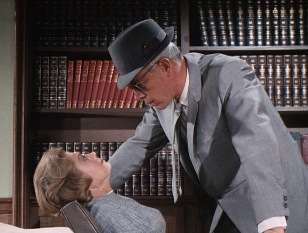
What is "Melancholy Horror?" I think it's my favorite horror sub-genre, at least for the moment. It's sort of difficult to describe, and I may be the only one actively trying to define it, but here goes:
I'd say it's a sub-genre of especially artistic horror/thriller/supernatural drama films that fill half of you with genuine scares, and the rest with a genuine sadness– or at least a sense of overwhelming alienation. They routinely begin and/or end with a tragedy, often of an accidental, non-supernatural variety. They were made, by and large, between 1970 and 1981, and mostly on lower budgets that lend them a very "documentary" feel. They always make the most of their budgets, however, and come across as very impressionistic, hypnotic, and dreamlike; the 1970s film stock often lending sunlight, candlelight, and fall colors a special ethereal prominence.

There's often a female or child protagonist slowly losing her mind, or slowly receiving a twisted spiritual enlightenment. (If it's a child, the odds are high that they'll be wearing a creepy nightgown at some point.) Often there's a conspiracy of dubious veracity. At the very least, these films are wrought beneath a haze of narrative ambiguity. Sometimes, afterward, you're not even sure that you've just seen a horror film, but you're unsettled just the same. Rarely are they fast-paced, but this only draws you in to their exquisite atmospheres even more; perhaps you even let your guard down...

They often have soundtracks comprised of flutes, harpsichords, or atonal noise; or, equally often, a solo classical pianist. Sometimes they're set in small towns, abandoned villas– or houses and shanties on the edge of a spooky desert, or a black forest. They generally feature little gore, if any (otherwise something like THE TEXAS CHAINSAW MASSACRE might fit in), and frequently deal with ghosts and madness and loss of identity.

Hard to say exactly what and who the grandfathers and grandmothers of this mini-genre are; I'd say perhaps the ghost stories of Henry James, M.R. James, Algernon Blackwood, and J.S. le Fanu, Japanese folk tales, European morbid fairy tales, Edgar Allan Poe, Dreyer's VAMPYR, Herk Harvey's CARNIVAL OF SOULS, Antonioni's BLOW-UP, Frankenheimer's SECONDS, and the films of Mario Bava and Ingmar Bergman.
So, without further adieu– JUNTA JULEIL'S TOP 20 MELANCHOLY FRIGHT FLICKS!
They aren't exactly ranked, per sé– but perhaps they are ordered by my enthusiasm. This is by no means a comprehensive list, and I invite you to submit your own recommendations in the comments section; I would love to discover more films of quality that fit the bill.
1. THE CHANGELING (1980, Peter Medak)

A sheer force of atmospheric dread. Medak is a master of effectively controlling space, foreboding architecture, and ornate interior design– as well as the roaming camera that captures them. The score, by Rick Wilkins, is hauntingly evocative, consisting of ever-flowing, swirling piano, surging and eddying like sudden rushes of air or gentle, ghostly breaths. It's almost as if a shroud lies draped upon the film- a defeated sigh, a pensive look, a sense of loss. As long as we fear the unknown, this film will resonate.
2. THE TENANT (1976, Roman Polanski)

One of the most frightening and claustrophobic movies I've ever seen. Polanski directs himself through a film full of disintegrating identities, bathroom hieroglyphics, Shelley Winters, and a world gone mad. The less you know, the better. Based on a novel by Roland Topor.
3. 3 WOMEN (1977, Robert Altman)

Halfway between PERSONA and SINGLE WHITE FEMALE is 3 WOMEN, and for my money, it transcends them both. (No high-heel murder, though– ha!) Impressions? Monstrous paintings. Old, well-used, bloated bodies, wading through a pool with waifish companions. People talking, but never listening. That terrifying mechanical bar curiosity, "Dirty Gertie." The tragedy of finger food prepared for guests who'll never come. A mysterious pile of gravel. I will spoil no more. Altman adapts one of his own dreams and in the process creates one of the finest films of the 70s. (Not to mention that the incredible Sissy Spacek and Shelley Duvall are two of the finest actors of their generation.)
4. PICNIC AT HANGING ROCK (1975, Peter Weir)

Buttoned-up lace and sun-beaten earth. Obsession. Hysterics. Frozen clocks. Young girls wandering among prehistoric boulders and deep crevices, never to be seen again. A deeply unsettling picture. J.D. over at Radiator Heaven just did a fantastic take on it here.
5. PHANTASM (1979, Don Coscarelli)

That spooky-rockin' soundtrack. The yellow blood. The Jawa-men. The box of pain (a DUNE homage?). That sleazy lean-to shack-bar that looks like a stiff wind could blow it over. The noiseless, alabaster-white corridors of the mausoleum. The angry red sky of the other dimension. The phantasm balls, and their hidden secrets. The Tall Man. BOYYYYYYYYY!
Few films build such a wonderful impression of the end of summer and the beginning of autumn. Ultimately, it's a grim coming-of-age, and minus the supernatural elements, I think that its honesty and sheer quality could have even made the "establishment" critics take notice. In fact, Coscarelli's first two films were slice-of-life coming-of-age flicks played straight (the excellent KENNY & CO. and JIM, THE WORLD'S GREATEST, the latter of which I have not seen). But let the establishment critics have their films, and let genre fans have PHANTASM.
And despite all it's wonderful bells (and balls) and whistles, it all really comes down to a feeling, an emptiness, a melancholy born of grieving. That secret urge to wander the graveyard on an overcast day, and see what you can see...
6. DON'T LOOK NOW (1973, Nicolas Roeg)

Marketed as a "psychic thriller," DON'T LOOK NOW is a subtle, bewitching marriage of virtuosic visuals with a story of genuine pathos and terrible dread– a real sense of loss accompanies the terror here. In a way, it is a film of textures– troubling, murky waters; shattered glass; the dreary, mottled marble. You dance in and out of consciousness, chasing that red-coated figure through the grey labyrinth of Venice and the boundless convolutions of the human mind. Based on the novel by Daphne du Maurier.
7. LET'S SCARE JESSICA TO DEATH (1971, John D. Hancock)

If I had to pick one movie that truly embodied what "melancholy horror" represents for me, it'd be LET'S SCARE JESSICA TO DEATH. It's handling of mental illness is eerie but always tasteful; its soundtrack is haunting and folksy, brimming with doleful sincerity; its low-budget is worn on its sleeve and only increases the film's authenticity; it's layered with intriguing, understated soundscapes; and Zohra Lampert's eponymous performance is heart-rending– everything the film needs lies in her bewildered gaze and her pitiful smile. And there's a dangerous streak that runs beneath the surface of this film– it feels raw, it feels immediate; it knows the Summer of Love is over, and that there's something blurry on the horizon that speaks to man's darker aspects. The sort of film that fuels sprawling, multi-layered dreams afterward... There's even a loving cult web tribute, and the enthusiastic ramshackle mood of the site fits the film perfectly.
8. DON'T BE AFRAID OF THE DARK (1973, John Newland)

"Can you see them, Sally ... hiding in the shadows? They're alive, Sally. They want you to be one of them when the lights go out." As I've said before, the film begins by adhering to the 'young couple moving into possibly haunted old house' template and proceeds to -quite rapidly- outperform the cliché with a combination of skillful realism and morbid, childlike dream-logic. The dynamics of marriage, the motif of the forgotten housewife, the attention paid to gender and overmedication, and the irresistibility of the unknown are tackled evenly, and it's tempered by a sense of Lovecraftian, ancestral doom. Likely the best made-for-television horror movie we'll ever see.
9. THE LITTLE GIRL WHO LIVES DOWN THE LANE (1976, Nicolas Gessner)

This is an odd one. Based on the novel and stage play by Laird Koenig, its major scenario (which I shall not reveal) is one that could just as easily occupy a child's daydreams or a child's nightmares. Centered around a bold, confident performance by an adolescent Jodie Foster, this tale is woven in the midst of an extremely evocative autumn atmosphere. In the midst of this cool, creepy ambiance and a damned gutsy plotline, the film even ventures to ask some pretty daring, open-ended questions about the usefulness of human society and its infrastructures in general. There's a strong supporting role by Martin Sheen as a complex, despicable being; and a pleasant bit by BAD RONALD's Scott Jacoby as a boy on the cusp of being a man; but still, the poetry is what makes the lasting impression: the quiet roar of the seashore, the stillness of the night, the glow of the candlelight, and perhaps the faintest scent of bitter almonds...
10. THE STEPFORD WIVES (1975, Bryan Forbes)

Ira Levin's work has a way of getting to you when you're at that oh-so-vulnerable point of moving into a new space or city– you don't know where anything is, you have no established circle of friends, and you sometimes feel like a prisoner in your own home. So you stick your neck out and discover that your environs are not so idyllic as they seemed at first glance... or maybe it's just the isolation talking. An effective and sociopolitical film that really works even if you've already had the major twist spoiled for you (via cultural osmosis).
11. NOSFERATU (1979, Werner Herzog)

An actual army of rats flooding the village of Wismar. Cow-biting. Gypsy violins. The stroke of genius in centering a NOSFERATU/DRACULA remake around the 70s' best psychotic approximation of Max Schreck: Klaus Kinski. From the opening shots of actual, dessicated corpses from the cholera-vaults of Guanajuato, Mexico (set to the strains of Popol Vuh), Herzog is letting us know that, no, he does not intend to fuck around. Kinski doesn't play the vampire as a villain, per sé– he's more like a resigned, intellectual animal-creature who finds himself to possess an unfortunate, unavoidable biological function: the fact that he has to schlerp on necks to survive. Though it remains faithful in many regards, there are plenty of twists on the well-known source material (very much in the vein of the changes Polanski made to MACBETH), and the whole affair is lightly swathed in the dreamlike, hypnotic atmosphere that Herzog perfected in occasionally macabre, but non-Horror films like HEART OF GLASS, AGUIRRE THE WRATH OF GOD, and THE ENIGMA OF KASPAR HAUSER– which makes it an excellent "Melancholy Horror" candidate.
12. MARTIN (1976, George A. Romero)

Ostensibly a "vampire" movie, MARTIN turns the genre on its ear into a meditation on suburban malaise in the greater Pittsburgh area. Our titular hero is a vampire. Only he doesn't have fangs or Svengali-esque powers of hypnosis, he has to use razor blades and roofie-laced syringes. And garlic and crucifixes don't seem to do much. And daylight's cool, too. But he's a vampire, yeah.
Romero's first collaboration with Tom Savini (acting and effects-wise), it becomes a psychosexual "coming of age" portrait filled with unnerving ambiguities, some great performances from some folks who are the antithesis of airbrushed Hollywood-types, and some good ole Rust Belt mysticism. And I don't believe I've ever quite squirmed so much during a vampire film. Romero considers it his finest work, and it's so damn well done, it's hard to argue with him.
13. NIGHT GALLERY(TV SERIES) (1969-1973, Rod Serling and others)

I know it's not technically a movie, but so frequently does it hit upon all the aspects of "Melancholy Horror" that I have defined, I feel as if I owe it a mention. Similar to THE TWILIGHT ZONE in many ways, NIGHT GALLERY differentiates itself by being a true product of the 70s, and, by and large, by telling different sorts of (melancholy) horror stories, stylishly and cinematically. Its avant-garde music and hallucinatory titles recall perhaps the surreal 60s work of Japanese auteur Hiroshi Teshigahara, and episodes like "The Doll," "Clean Kills and Other Trophies," "The Caterpillar," "Certain Shadows on the Wall," and the incredibly well-directed (by John Astin!) "The House" really tap into this subgenre, feeling often like mystical little fever-dreams. Hurried production schedules give it that raw, occasionally indie feel, and nothing really can match the joy of seeing Serling striding around the Night Gallery, clasping his hands and tersely informing us of the shocks in store...
14. TOURIST TRAP (1979, David Schmoeller)

As I've asked before, what is it that elevates this flick from 'boondocks slasher' rip-off to a quiet masterpiece of 70s horror? How about a crew defined by a dedication to genuine- and sometimes avant-garde artistry? Check it out: TOURIST TRAP possesses ethereal, soft-focus visuals courtesy of Nicholas Josef von Sternberg (DISCO 9000, GAS PUMP GIRLS), son of- yup, Josef von Sternberg; an eerie, unsettling Italian soundtrack full of echoey wailing and offbeat woodblock/slide whistle/ominous harpsicord curiosities courtesy of Pino Donaggio (DON'T LOOK NOW, TRAUMA, PIRANHA, countless Brian de Palma flicks); and mesmerizing, mood-fitting editing by future director Ted Nicolaou (TERRORVISION). All of this might sound silly on the page, but, trust me, when it all comes together, it's truly special. Also... MANNEQUINS.
15. PHASE IV (1974, Saul Bass)

Before you whine that it's more sci-fi than horror– please tell me what bodily and psychological sensations you were experiencing the last time ANTS WERE CRAWLING ON YOUR NAKED BODY. But, to be serious, this isn't a "killer-bug" flick, or else it wouldn't be on this list. I've written at length about it elsewhere, but let me say that Bass creates a cruel, exotic worldscape of geodesic domes, subterranean tunnels, microscopic photography, and blistering sunlight. Brian Gascoigne's accompanying soundscapes are often electronic, high-pitched, oscillating frequencies; elsewhere they're eerie synthesized organs and low, dissonant tones. This film is trippy as shit, and it's as beautiful as it is troubling. PHASE IV is order and disorder. Geometry and disarray. Patterns and chaos. Symbols and meaninglessness. It's something hidden- buried- within our souls and etched upon our spinal columns. It's been with us since the stone faces were built on Easter Island and since the time of the pyramids and before. Each and every image captivates us, fascinates us, because deep down we know that we are not the masters of this planet. It's not a chronicle of a young person's descent into madness, like many of these other films, it's the chronicle of a species, an entire planet undergoing that blood-curdling journey into the unknown...
16. DAUGHTERS OF DARKNESS (1971, Harry Kümel)

When somebody describes a film to me as a "Euro-Vampire Lesbian Movie from the 70s," I sort of assume it's going to be soft-core hilarity in the vein of Joe D'Amato– instead, this feels like a Fassbinder flick with a little bit of blood, or perhaps an Albee play directed by Argento. Set in an empty seaside hotel in Belgium in the wake of a series of mysterious, blood-draining murders, DAUGHTERS OF DARKNESS explores the flexibility of human sexuality (equally on the sado/masochistic spectrum as well as the hetero/homosexual one) and indeed the flexibility of human identity. Delphine Seyrig (as The Countess Bathery) steals the show in an otherworldly, Weimar-style old-school starlet performance; she's the sort of actor who has no trouble convincing you that she could be several centuries old, and she uses it as a starting point for some extraordinarily nuanced drama. (There's also a chuckle-inducing appearance by a sugar daddy whom IMDb user kwedgwood hilariously and accurately describes as an "older, dominant and pampered sissy.") Anyway, there's a pensive mood, graceful seascapes, and loads of interesting and beautiful faces– the sort that surface especially in European art films from the 60s and 70s.
17. THE BEGUILED (1971, Don Siegel)

Based on a novel by Thomas Cullinan, it invokes the spirit and temperaments of Poe, Bierce, Hawthorne, and Capote, and the resulting film possesses a sort of 'Southern Gothic psychedelic existentialism.' It almost has the feel of SPIDER BABY combined with THE GOOD, THE BAD, AND THE UGLY. Lalo Schifrin delivers his most mature, complex score (full of deep, echoey flutes, mournful oboes, and intricate harpiscords), and it perfectly complements the mood of the film. Stifling, hypnotic, even baroque, the film is presented from an omniscient perspective: different characters' thoughts, memories, and hypocrisies bleed into one another, like wreckage upon wreckage. You can blame it on the war or you can blame it on human nature, but no one- not even the sweetest, most innocent of little girls- emerges from this thing unscathed.
18. AUDREY ROSE (1977, Robert Wise)

Not quite a horror film, not quite a drama, AUDREY ROSE takes a serious and sometimes scary look at reincarnation while making use of a few tropes from the "ghost story" genre. It's anchored by strong performances by Marsha Mason (as a mother coming unraveled) and a young Anthony Hopkins (as a mysterious stranger who may have a link to her family, involving past lives). Child actor Susan Swift does a fine job, too, and manages, uncannily, to look a lot like "kiddie Karen Black." Though it lingers perhaps too much on courtroom scenes in the latter half, the film maintains a splendid atmosphere of discomfiture without ever overtly dipping into horror. Based on the novel by Frank De Felitta (THE ENTITY).
19. DEAD AND BURIED (1981, Gary Sherman)

I've written about this film before, and it manages to capture all the melancholy frights of the seaside. The waves roll in, crest, and break; smashing against the rocks. There's a violent tranquility in that. Dusk falls. Colors in the sky obscured by clouds. You smell the salty air. There is a wonderful haze so thick on the film stock, you feel as if you could reach into the screen and run your fingers through it. There are some fine scares at play here, too, not to mention one of the freakiest bandaged men in all of filmdom. Similar to LET'S SCARE JESSICA TO DEATH in its claustrophobic portrayal of a small town gone (seemingly?) mad. Like a gloom-soaked EC comic for adults.
20. VALERIE AND HER WEEK OF WONDERS (1970, Jaromil Jires)

As I've said before, some have called VALERIE a fairy tale, inspired by the likes of ALICE IN WONDERLAND and LITTLE RED RIDING HOOD. It's even more appealing to pin it down as such, given its clear influence on subsequent works from Angela Carter and Neil Jordan's THE COMPANY OF WOLVES to Jan Svankmajer's ALICE to even Lynch and Frost's TWIN PEAKS, but I think it might be more accurate to say that it resembles a medieval painting 'come to life.' Imagine a sprawling vision by Bosch, brimming with disturbing, inscrutable visual metaphors and beguiling, fleeting reveries; fair maidens and old crones; men of the cloth and perversions of men of the cloth; dances of life and dances of death. It's truly as if a portal has opened from within one of these masterworks and allowed us a quite tangible, timeless taste of its fancifully macabre contents (or as tangible as twenty-four frames-per-second will allow).
Honorable Mention: Altman's IMAGES, Bergman's THE SERPENT'S EGG, Romero's SEASON OF THE WITCH, Clark's BLACK CHRISTMAS, Leacock and Matheson's DYING ROOM ONLY.
Honorable Mentions that are a little too polished and high-profile to quite qualify: De Palma's OBSESSION, Kubrick's THE SHINING.
Movies that I haven't yet seen (as of Oct. 2012), but I am told fit the bill: Fuest's AND SOON THE DARKNESS, Fulci's DON'T TORTURE A DUCKLING, Fleischer's SEE NO EVIL, Mulligan's THE OTHER, Benedek's THE NIGHT VISITOR, Martino's ALL THE COLORS OF THE DARK. I'd be particularly interested in the feedback of those who have seen some of these, too!
-Sean Gill

There's often a female or child protagonist slowly losing her mind, or slowly receiving a twisted spiritual enlightenment. (If it's a child, the odds are high that they'll be wearing a creepy nightgown at some point.) Often there's a conspiracy of dubious veracity. At the very least, these films are wrought beneath a haze of narrative ambiguity. Sometimes, afterward, you're not even sure that you've just seen a horror film, but you're unsettled just the same. Rarely are they fast-paced, but this only draws you in to their exquisite atmospheres even more; perhaps you even let your guard down...

They often have soundtracks comprised of flutes, harpsichords, or atonal noise; or, equally often, a solo classical pianist. Sometimes they're set in small towns, abandoned villas– or houses and shanties on the edge of a spooky desert, or a black forest. They generally feature little gore, if any (otherwise something like THE TEXAS CHAINSAW MASSACRE might fit in), and frequently deal with ghosts and madness and loss of identity.

Hard to say exactly what and who the grandfathers and grandmothers of this mini-genre are; I'd say perhaps the ghost stories of Henry James, M.R. James, Algernon Blackwood, and J.S. le Fanu, Japanese folk tales, European morbid fairy tales, Edgar Allan Poe, Dreyer's VAMPYR, Herk Harvey's CARNIVAL OF SOULS, Antonioni's BLOW-UP, Frankenheimer's SECONDS, and the films of Mario Bava and Ingmar Bergman.
So, without further adieu– JUNTA JULEIL'S TOP 20 MELANCHOLY FRIGHT FLICKS!
They aren't exactly ranked, per sé– but perhaps they are ordered by my enthusiasm. This is by no means a comprehensive list, and I invite you to submit your own recommendations in the comments section; I would love to discover more films of quality that fit the bill.
1. THE CHANGELING (1980, Peter Medak)

A sheer force of atmospheric dread. Medak is a master of effectively controlling space, foreboding architecture, and ornate interior design– as well as the roaming camera that captures them. The score, by Rick Wilkins, is hauntingly evocative, consisting of ever-flowing, swirling piano, surging and eddying like sudden rushes of air or gentle, ghostly breaths. It's almost as if a shroud lies draped upon the film- a defeated sigh, a pensive look, a sense of loss. As long as we fear the unknown, this film will resonate.
2. THE TENANT (1976, Roman Polanski)

One of the most frightening and claustrophobic movies I've ever seen. Polanski directs himself through a film full of disintegrating identities, bathroom hieroglyphics, Shelley Winters, and a world gone mad. The less you know, the better. Based on a novel by Roland Topor.
3. 3 WOMEN (1977, Robert Altman)

Halfway between PERSONA and SINGLE WHITE FEMALE is 3 WOMEN, and for my money, it transcends them both. (No high-heel murder, though– ha!) Impressions? Monstrous paintings. Old, well-used, bloated bodies, wading through a pool with waifish companions. People talking, but never listening. That terrifying mechanical bar curiosity, "Dirty Gertie." The tragedy of finger food prepared for guests who'll never come. A mysterious pile of gravel. I will spoil no more. Altman adapts one of his own dreams and in the process creates one of the finest films of the 70s. (Not to mention that the incredible Sissy Spacek and Shelley Duvall are two of the finest actors of their generation.)
4. PICNIC AT HANGING ROCK (1975, Peter Weir)

Buttoned-up lace and sun-beaten earth. Obsession. Hysterics. Frozen clocks. Young girls wandering among prehistoric boulders and deep crevices, never to be seen again. A deeply unsettling picture. J.D. over at Radiator Heaven just did a fantastic take on it here.
5. PHANTASM (1979, Don Coscarelli)

That spooky-rockin' soundtrack. The yellow blood. The Jawa-men. The box of pain (a DUNE homage?). That sleazy lean-to shack-bar that looks like a stiff wind could blow it over. The noiseless, alabaster-white corridors of the mausoleum. The angry red sky of the other dimension. The phantasm balls, and their hidden secrets. The Tall Man. BOYYYYYYYYY!
Few films build such a wonderful impression of the end of summer and the beginning of autumn. Ultimately, it's a grim coming-of-age, and minus the supernatural elements, I think that its honesty and sheer quality could have even made the "establishment" critics take notice. In fact, Coscarelli's first two films were slice-of-life coming-of-age flicks played straight (the excellent KENNY & CO. and JIM, THE WORLD'S GREATEST, the latter of which I have not seen). But let the establishment critics have their films, and let genre fans have PHANTASM.
And despite all it's wonderful bells (and balls) and whistles, it all really comes down to a feeling, an emptiness, a melancholy born of grieving. That secret urge to wander the graveyard on an overcast day, and see what you can see...
6. DON'T LOOK NOW (1973, Nicolas Roeg)

Marketed as a "psychic thriller," DON'T LOOK NOW is a subtle, bewitching marriage of virtuosic visuals with a story of genuine pathos and terrible dread– a real sense of loss accompanies the terror here. In a way, it is a film of textures– troubling, murky waters; shattered glass; the dreary, mottled marble. You dance in and out of consciousness, chasing that red-coated figure through the grey labyrinth of Venice and the boundless convolutions of the human mind. Based on the novel by Daphne du Maurier.
7. LET'S SCARE JESSICA TO DEATH (1971, John D. Hancock)

If I had to pick one movie that truly embodied what "melancholy horror" represents for me, it'd be LET'S SCARE JESSICA TO DEATH. It's handling of mental illness is eerie but always tasteful; its soundtrack is haunting and folksy, brimming with doleful sincerity; its low-budget is worn on its sleeve and only increases the film's authenticity; it's layered with intriguing, understated soundscapes; and Zohra Lampert's eponymous performance is heart-rending– everything the film needs lies in her bewildered gaze and her pitiful smile. And there's a dangerous streak that runs beneath the surface of this film– it feels raw, it feels immediate; it knows the Summer of Love is over, and that there's something blurry on the horizon that speaks to man's darker aspects. The sort of film that fuels sprawling, multi-layered dreams afterward... There's even a loving cult web tribute, and the enthusiastic ramshackle mood of the site fits the film perfectly.
8. DON'T BE AFRAID OF THE DARK (1973, John Newland)

"Can you see them, Sally ... hiding in the shadows? They're alive, Sally. They want you to be one of them when the lights go out." As I've said before, the film begins by adhering to the 'young couple moving into possibly haunted old house' template and proceeds to -quite rapidly- outperform the cliché with a combination of skillful realism and morbid, childlike dream-logic. The dynamics of marriage, the motif of the forgotten housewife, the attention paid to gender and overmedication, and the irresistibility of the unknown are tackled evenly, and it's tempered by a sense of Lovecraftian, ancestral doom. Likely the best made-for-television horror movie we'll ever see.
9. THE LITTLE GIRL WHO LIVES DOWN THE LANE (1976, Nicolas Gessner)

This is an odd one. Based on the novel and stage play by Laird Koenig, its major scenario (which I shall not reveal) is one that could just as easily occupy a child's daydreams or a child's nightmares. Centered around a bold, confident performance by an adolescent Jodie Foster, this tale is woven in the midst of an extremely evocative autumn atmosphere. In the midst of this cool, creepy ambiance and a damned gutsy plotline, the film even ventures to ask some pretty daring, open-ended questions about the usefulness of human society and its infrastructures in general. There's a strong supporting role by Martin Sheen as a complex, despicable being; and a pleasant bit by BAD RONALD's Scott Jacoby as a boy on the cusp of being a man; but still, the poetry is what makes the lasting impression: the quiet roar of the seashore, the stillness of the night, the glow of the candlelight, and perhaps the faintest scent of bitter almonds...
10. THE STEPFORD WIVES (1975, Bryan Forbes)

Ira Levin's work has a way of getting to you when you're at that oh-so-vulnerable point of moving into a new space or city– you don't know where anything is, you have no established circle of friends, and you sometimes feel like a prisoner in your own home. So you stick your neck out and discover that your environs are not so idyllic as they seemed at first glance... or maybe it's just the isolation talking. An effective and sociopolitical film that really works even if you've already had the major twist spoiled for you (via cultural osmosis).
11. NOSFERATU (1979, Werner Herzog)

An actual army of rats flooding the village of Wismar. Cow-biting. Gypsy violins. The stroke of genius in centering a NOSFERATU/DRACULA remake around the 70s' best psychotic approximation of Max Schreck: Klaus Kinski. From the opening shots of actual, dessicated corpses from the cholera-vaults of Guanajuato, Mexico (set to the strains of Popol Vuh), Herzog is letting us know that, no, he does not intend to fuck around. Kinski doesn't play the vampire as a villain, per sé– he's more like a resigned, intellectual animal-creature who finds himself to possess an unfortunate, unavoidable biological function: the fact that he has to schlerp on necks to survive. Though it remains faithful in many regards, there are plenty of twists on the well-known source material (very much in the vein of the changes Polanski made to MACBETH), and the whole affair is lightly swathed in the dreamlike, hypnotic atmosphere that Herzog perfected in occasionally macabre, but non-Horror films like HEART OF GLASS, AGUIRRE THE WRATH OF GOD, and THE ENIGMA OF KASPAR HAUSER– which makes it an excellent "Melancholy Horror" candidate.
12. MARTIN (1976, George A. Romero)

Ostensibly a "vampire" movie, MARTIN turns the genre on its ear into a meditation on suburban malaise in the greater Pittsburgh area. Our titular hero is a vampire. Only he doesn't have fangs or Svengali-esque powers of hypnosis, he has to use razor blades and roofie-laced syringes. And garlic and crucifixes don't seem to do much. And daylight's cool, too. But he's a vampire, yeah.
Romero's first collaboration with Tom Savini (acting and effects-wise), it becomes a psychosexual "coming of age" portrait filled with unnerving ambiguities, some great performances from some folks who are the antithesis of airbrushed Hollywood-types, and some good ole Rust Belt mysticism. And I don't believe I've ever quite squirmed so much during a vampire film. Romero considers it his finest work, and it's so damn well done, it's hard to argue with him.
13. NIGHT GALLERY(TV SERIES) (1969-1973, Rod Serling and others)

I know it's not technically a movie, but so frequently does it hit upon all the aspects of "Melancholy Horror" that I have defined, I feel as if I owe it a mention. Similar to THE TWILIGHT ZONE in many ways, NIGHT GALLERY differentiates itself by being a true product of the 70s, and, by and large, by telling different sorts of (melancholy) horror stories, stylishly and cinematically. Its avant-garde music and hallucinatory titles recall perhaps the surreal 60s work of Japanese auteur Hiroshi Teshigahara, and episodes like "The Doll," "Clean Kills and Other Trophies," "The Caterpillar," "Certain Shadows on the Wall," and the incredibly well-directed (by John Astin!) "The House" really tap into this subgenre, feeling often like mystical little fever-dreams. Hurried production schedules give it that raw, occasionally indie feel, and nothing really can match the joy of seeing Serling striding around the Night Gallery, clasping his hands and tersely informing us of the shocks in store...
14. TOURIST TRAP (1979, David Schmoeller)

As I've asked before, what is it that elevates this flick from 'boondocks slasher' rip-off to a quiet masterpiece of 70s horror? How about a crew defined by a dedication to genuine- and sometimes avant-garde artistry? Check it out: TOURIST TRAP possesses ethereal, soft-focus visuals courtesy of Nicholas Josef von Sternberg (DISCO 9000, GAS PUMP GIRLS), son of- yup, Josef von Sternberg; an eerie, unsettling Italian soundtrack full of echoey wailing and offbeat woodblock/slide whistle/ominous harpsicord curiosities courtesy of Pino Donaggio (DON'T LOOK NOW, TRAUMA, PIRANHA, countless Brian de Palma flicks); and mesmerizing, mood-fitting editing by future director Ted Nicolaou (TERRORVISION). All of this might sound silly on the page, but, trust me, when it all comes together, it's truly special. Also... MANNEQUINS.
15. PHASE IV (1974, Saul Bass)

Before you whine that it's more sci-fi than horror– please tell me what bodily and psychological sensations you were experiencing the last time ANTS WERE CRAWLING ON YOUR NAKED BODY. But, to be serious, this isn't a "killer-bug" flick, or else it wouldn't be on this list. I've written at length about it elsewhere, but let me say that Bass creates a cruel, exotic worldscape of geodesic domes, subterranean tunnels, microscopic photography, and blistering sunlight. Brian Gascoigne's accompanying soundscapes are often electronic, high-pitched, oscillating frequencies; elsewhere they're eerie synthesized organs and low, dissonant tones. This film is trippy as shit, and it's as beautiful as it is troubling. PHASE IV is order and disorder. Geometry and disarray. Patterns and chaos. Symbols and meaninglessness. It's something hidden- buried- within our souls and etched upon our spinal columns. It's been with us since the stone faces were built on Easter Island and since the time of the pyramids and before. Each and every image captivates us, fascinates us, because deep down we know that we are not the masters of this planet. It's not a chronicle of a young person's descent into madness, like many of these other films, it's the chronicle of a species, an entire planet undergoing that blood-curdling journey into the unknown...
16. DAUGHTERS OF DARKNESS (1971, Harry Kümel)

When somebody describes a film to me as a "Euro-Vampire Lesbian Movie from the 70s," I sort of assume it's going to be soft-core hilarity in the vein of Joe D'Amato– instead, this feels like a Fassbinder flick with a little bit of blood, or perhaps an Albee play directed by Argento. Set in an empty seaside hotel in Belgium in the wake of a series of mysterious, blood-draining murders, DAUGHTERS OF DARKNESS explores the flexibility of human sexuality (equally on the sado/masochistic spectrum as well as the hetero/homosexual one) and indeed the flexibility of human identity. Delphine Seyrig (as The Countess Bathery) steals the show in an otherworldly, Weimar-style old-school starlet performance; she's the sort of actor who has no trouble convincing you that she could be several centuries old, and she uses it as a starting point for some extraordinarily nuanced drama. (There's also a chuckle-inducing appearance by a sugar daddy whom IMDb user kwedgwood hilariously and accurately describes as an "older, dominant and pampered sissy.") Anyway, there's a pensive mood, graceful seascapes, and loads of interesting and beautiful faces– the sort that surface especially in European art films from the 60s and 70s.
17. THE BEGUILED (1971, Don Siegel)

Based on a novel by Thomas Cullinan, it invokes the spirit and temperaments of Poe, Bierce, Hawthorne, and Capote, and the resulting film possesses a sort of 'Southern Gothic psychedelic existentialism.' It almost has the feel of SPIDER BABY combined with THE GOOD, THE BAD, AND THE UGLY. Lalo Schifrin delivers his most mature, complex score (full of deep, echoey flutes, mournful oboes, and intricate harpiscords), and it perfectly complements the mood of the film. Stifling, hypnotic, even baroque, the film is presented from an omniscient perspective: different characters' thoughts, memories, and hypocrisies bleed into one another, like wreckage upon wreckage. You can blame it on the war or you can blame it on human nature, but no one- not even the sweetest, most innocent of little girls- emerges from this thing unscathed.
18. AUDREY ROSE (1977, Robert Wise)

Not quite a horror film, not quite a drama, AUDREY ROSE takes a serious and sometimes scary look at reincarnation while making use of a few tropes from the "ghost story" genre. It's anchored by strong performances by Marsha Mason (as a mother coming unraveled) and a young Anthony Hopkins (as a mysterious stranger who may have a link to her family, involving past lives). Child actor Susan Swift does a fine job, too, and manages, uncannily, to look a lot like "kiddie Karen Black." Though it lingers perhaps too much on courtroom scenes in the latter half, the film maintains a splendid atmosphere of discomfiture without ever overtly dipping into horror. Based on the novel by Frank De Felitta (THE ENTITY).
19. DEAD AND BURIED (1981, Gary Sherman)

I've written about this film before, and it manages to capture all the melancholy frights of the seaside. The waves roll in, crest, and break; smashing against the rocks. There's a violent tranquility in that. Dusk falls. Colors in the sky obscured by clouds. You smell the salty air. There is a wonderful haze so thick on the film stock, you feel as if you could reach into the screen and run your fingers through it. There are some fine scares at play here, too, not to mention one of the freakiest bandaged men in all of filmdom. Similar to LET'S SCARE JESSICA TO DEATH in its claustrophobic portrayal of a small town gone (seemingly?) mad. Like a gloom-soaked EC comic for adults.
20. VALERIE AND HER WEEK OF WONDERS (1970, Jaromil Jires)

As I've said before, some have called VALERIE a fairy tale, inspired by the likes of ALICE IN WONDERLAND and LITTLE RED RIDING HOOD. It's even more appealing to pin it down as such, given its clear influence on subsequent works from Angela Carter and Neil Jordan's THE COMPANY OF WOLVES to Jan Svankmajer's ALICE to even Lynch and Frost's TWIN PEAKS, but I think it might be more accurate to say that it resembles a medieval painting 'come to life.' Imagine a sprawling vision by Bosch, brimming with disturbing, inscrutable visual metaphors and beguiling, fleeting reveries; fair maidens and old crones; men of the cloth and perversions of men of the cloth; dances of life and dances of death. It's truly as if a portal has opened from within one of these masterworks and allowed us a quite tangible, timeless taste of its fancifully macabre contents (or as tangible as twenty-four frames-per-second will allow).
Honorable Mention: Altman's IMAGES, Bergman's THE SERPENT'S EGG, Romero's SEASON OF THE WITCH, Clark's BLACK CHRISTMAS, Leacock and Matheson's DYING ROOM ONLY.
Honorable Mentions that are a little too polished and high-profile to quite qualify: De Palma's OBSESSION, Kubrick's THE SHINING.
Movies that I haven't yet seen (as of Oct. 2012), but I am told fit the bill: Fuest's AND SOON THE DARKNESS, Fulci's DON'T TORTURE A DUCKLING, Fleischer's SEE NO EVIL, Mulligan's THE OTHER, Benedek's THE NIGHT VISITOR, Martino's ALL THE COLORS OF THE DARK. I'd be particularly interested in the feedback of those who have seen some of these, too!
-Sean Gill